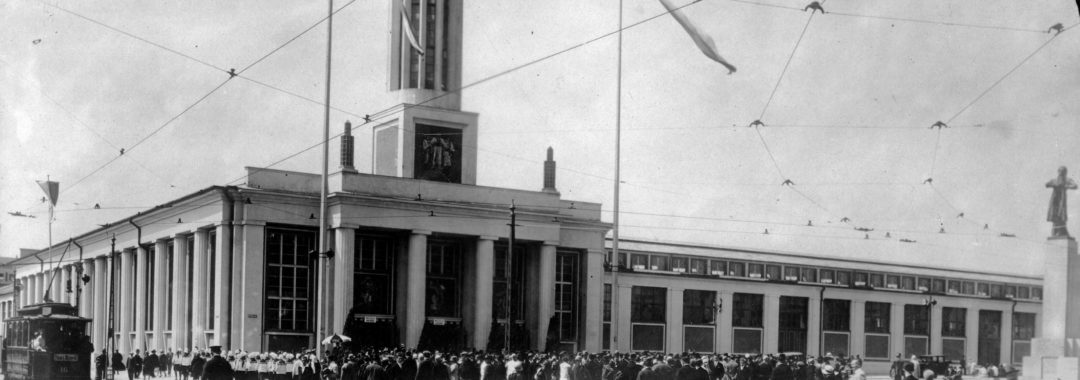
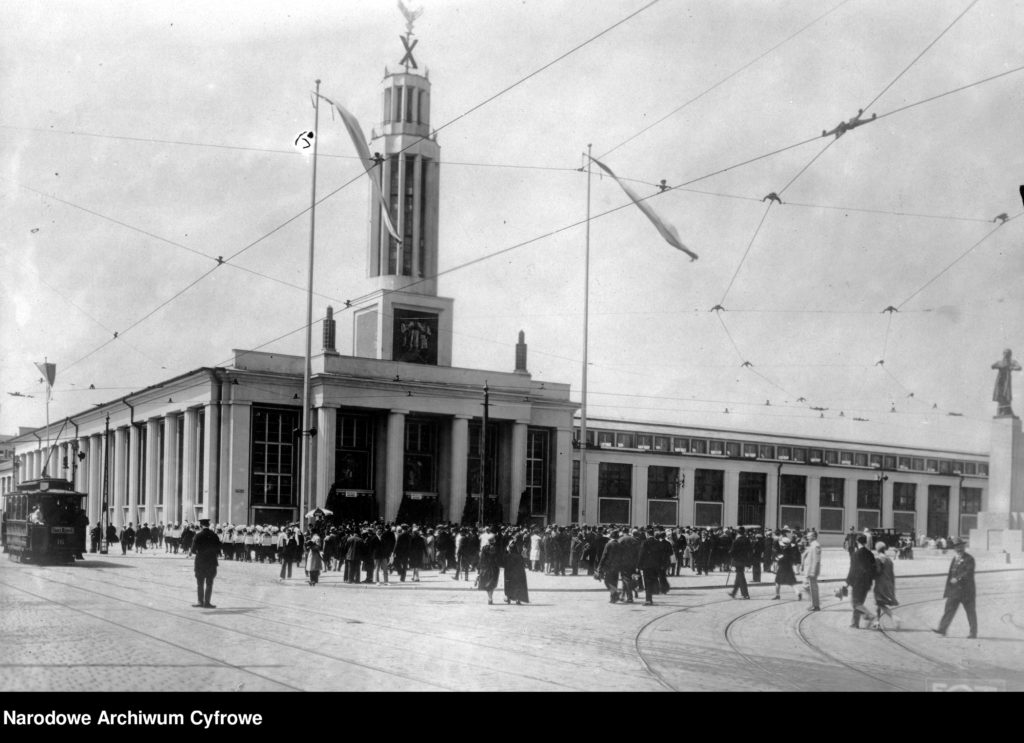
Trade fairs in Poznań have been organized since 1921. Economic growth during the boom years of the 1920s, their internationalization in 1925, and above all the spectacular National General Exhibition transformed Poznań into a major exhibition center on the map of Europe and the world.
The National General Exhibition took place from May 16 to September 30, 1929. In one place and at one time, it presented the achievements of reborn Poland in the fields of economy, science, and culture. For the purposes of the event, a total of 112 structures were built across an area of 65 hectares in Poznań. The organization of PeWuKa involved the most prominent figures in the state. During the 138 days of the Great Exhibition, the capital of Greater Poland was visited by 4.5 million guests from Poland and abroad.
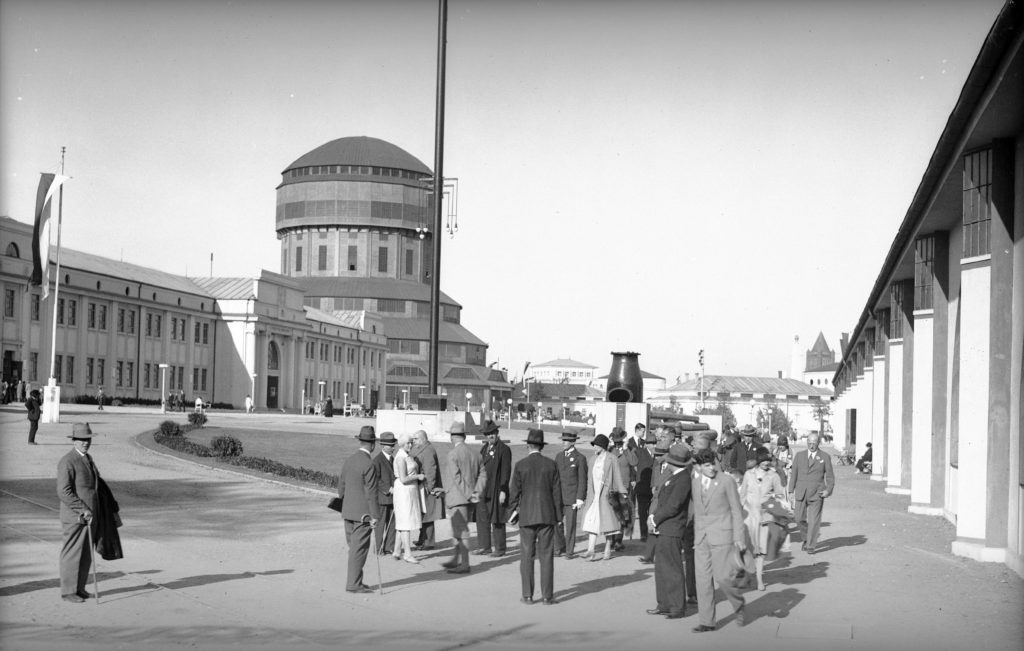
PeWuKa fulfilled its purpose of presenting a balance sheet of Poland’s first ten years after regaining independence. Poles — including those from abroad who visited the Exhibition — returned home filled with pride and joy. The titanic work of the teams responsible for organizing the event, combined with enormous social mobilization, led to the urban development of the city and the preparation of an undertaking on a scale surpassing all previous events of this kind. The organizers hoped that PeWuKa would stimulate exports and the domestic market, help integrate the country after 123 years of partitions, present Poland abroad as a stable, trustworthy, and prosperous nation, and strengthen ties among Poles scattered around the world. The economic crisis of the 1930s slowed these optimistic ambitions. Nevertheless, there is no doubt that without PeWuKa, without the ethos of its creators and the trade fair traditions it established, it would have been far more difficult for Poznań to mobilize its post-war resources, rebuild the Trade Fairs from ruins, and restore their former prestige.
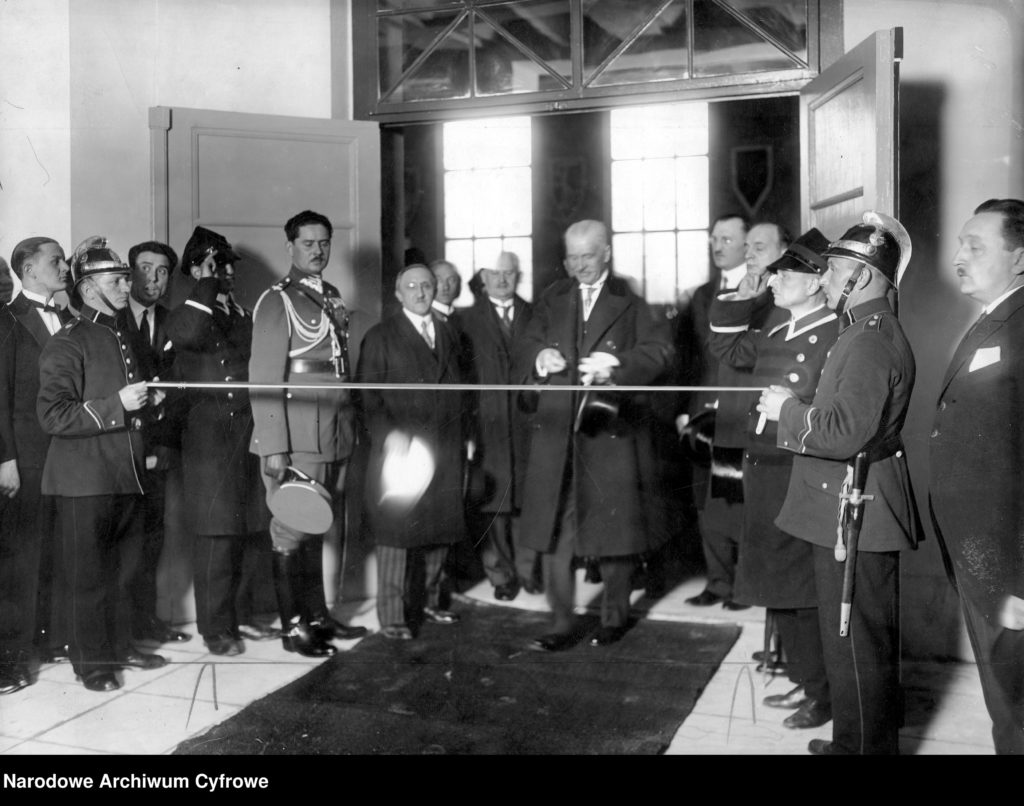
History is a unique bridge between the past and the present, actively shaping the identity and collective memory of local communities and nations. Events as spectacular as PeWuKa create a sphere of symbols that influence the mentality and culture of the people of Poznań.
Much has already been written about PeWuKa. We know of its grandeur and all its impressive statistics. We understand how deeply it influenced Poznań and Poland. Yet, with two years remaining before its centenary, it is worth asking how we perceive this event today. What associations does PeWuKa evoke? Can the values embraced by its organizers still appeal to contemporary residents of Greater Poland and to Poles in general? How should we tell the story of PeWuKa so that its message remains understandable today?
We encourage everyone to share their opinions as part of a dialogue between history and the present day. Please send your ideas to: archiwum@grupamtp.pl
On behalf of the organizer, the PeWuKa 2 Association, we also invite lovers of Poznań and the Trade Fairs to attend the congress “Does Poznań Need a Second PeWuKa?”, which will take place at the Aula Collegium Politicum of Adam Mickiewicz University on May 16 at 10:00 a.m.
—————————————————————————————————–
